What defines who we are at a glance? or careful study?
Identity Variables
Individuals, Societies, and States
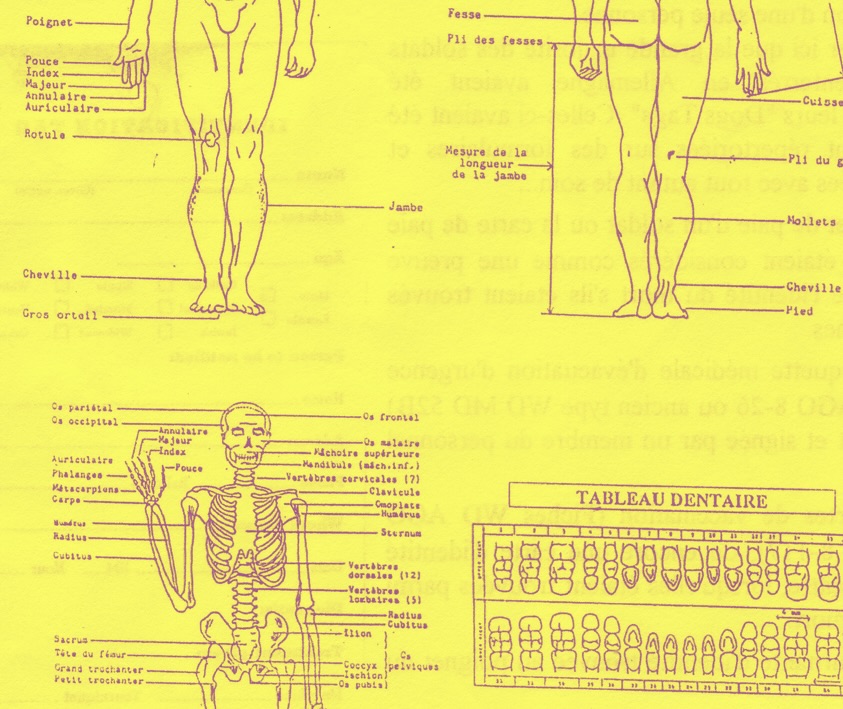
Tracing regimes took a technoscientific turn in the last half of the 19th C. Society responded to growing populations, systems of authority, regimes of control, and disciplining groups and individuals. This essay looks to explore the portion of these regimes pertaining to individual identity, identification science, and exploration of who we are and to whom do we belong.
Scientific measurement, observation, and classification adopted by legal medicine, anthropology, crime investigation and control of criminals faced social challenges. Large urban population centers, and expansion-ship frontiers raised the need for determination of identity with certainty and proof. Scientists and governments asked questions of lineage, and the correlation of traits and behaviors with identities.
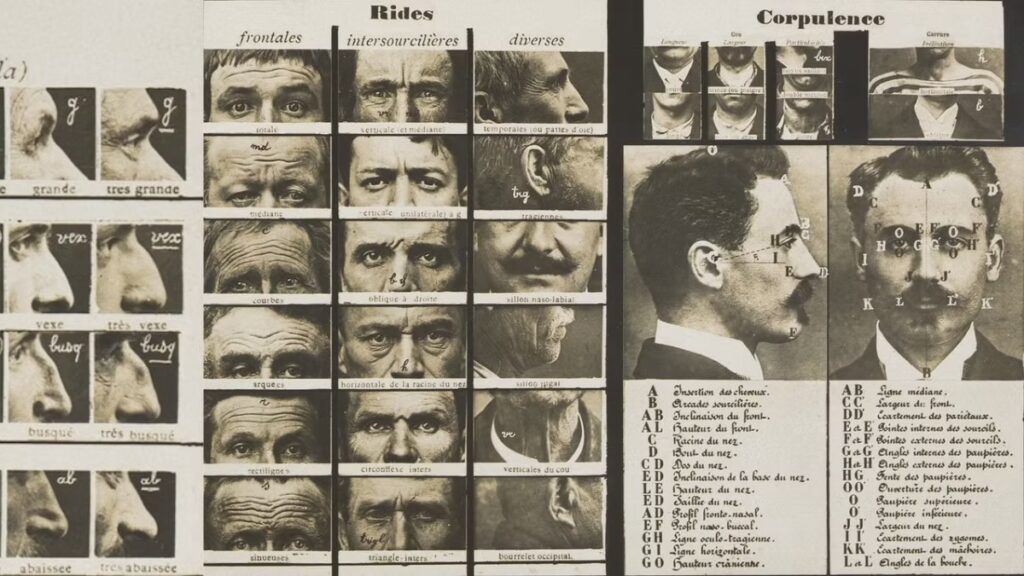
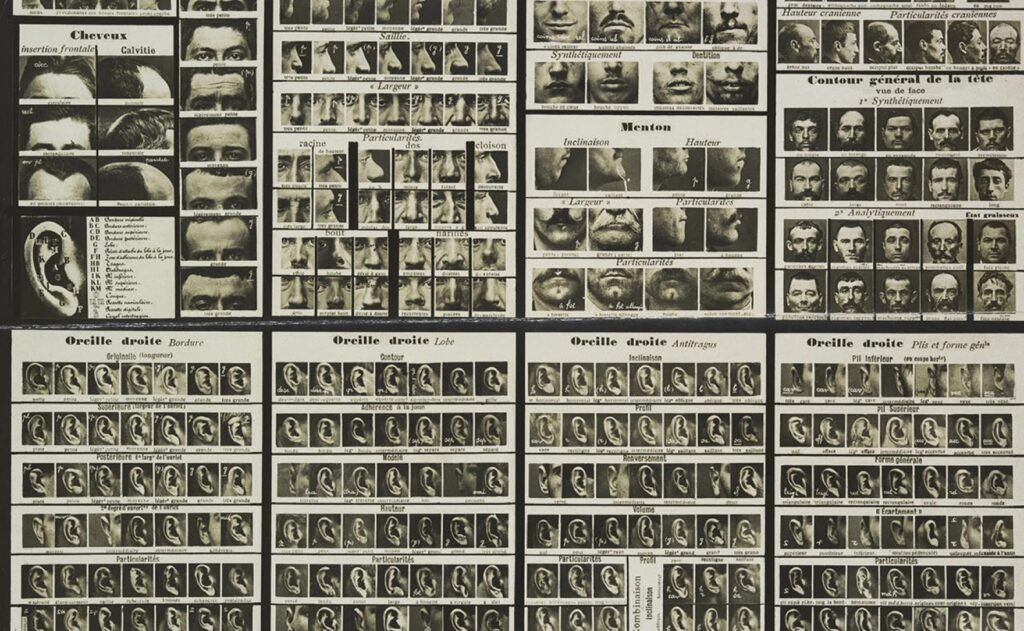
The most direct efforts to specify individuals in the late 19th Century drew from funded and state focused efforts to identify criminals, control undifferentiated populations, and establish regimes of hierarchy for rights, status, and group identities. Bertillonage established a consistent measured technical and repeatable process to document and record durable features and dimensions of identity.
~>
These trends led to the establishment of fileable cards, indices, and photographs that could be transmitted, compared and establish identity despite socially obscuring claims, forgeries, and details that could defeat recognition by glance or inspection of similarity.
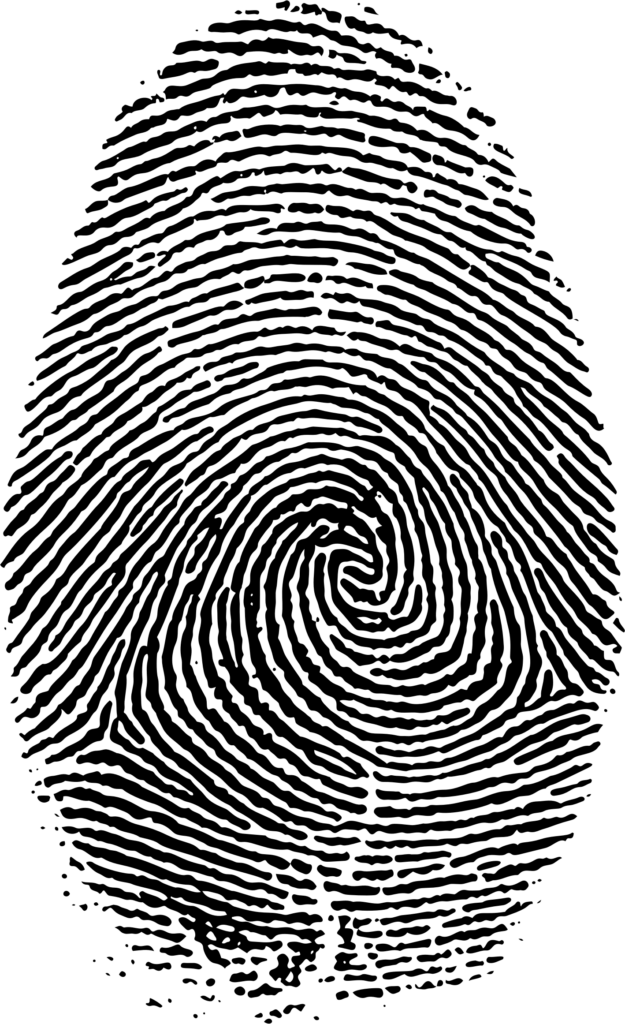
Fingerprinting also emerged as a means of individual identification for criminal investigation, distribution of wages, tallying, and discriminating colonial populations. The statistical and orderly permanence of preserved ink, categorization guides, and indexing offered a promise of certainty for state investigations and systems of control.
Political trends including democracy, labor, mass production, and global trade influenced both individualism, standardization of sizing, race understanding, colonial imperialism and nationalism. Cultural trends of around war and death, from enlistment standards, to modernizing of death care and memorializing rituals were also met by both military and humanitarian commitments to individual recognition and identification.
Two paths we follow:
identity as a locus of control, discipline, and descriptive/proscriptive naming.
identity as a uniqueness, endowed with rights, universal needs, and capacity for self and familial worth.
Tracing in WWII
Names, Numbers and Traces
Global and local conflicts of the first half of the 20th C. led to deaths of millions of civilians and military service members. The tracing of the people involved, targeted, conscripted, concentrated, captured, and mobilized leveraged all these identification methods and invented new ones to scale and accelerate the naming and identifying of individuals.
From a humanitarian perspective this discussion will focus on International Committee of the Red Cross (ICRC) and the efforts to identify military and civilian war dead. Building upon a movement to recognize human suffering and dignify the individual and the people affected by warfare, confinement, displacement, and wounds, and death.
The ICRC Central Tracing Agency provided a neutral effort to provide means of tracing and communication with prisoners, internees, displaced and hospitalized individuals. A tracing file could be started and supported by state level data, administrative information and correspondence from and to affected persons. These efforts relied upon translation, transmission, and innovations like IBM Hollerith Cards.
Who cares about finding us and knowing us?
~>
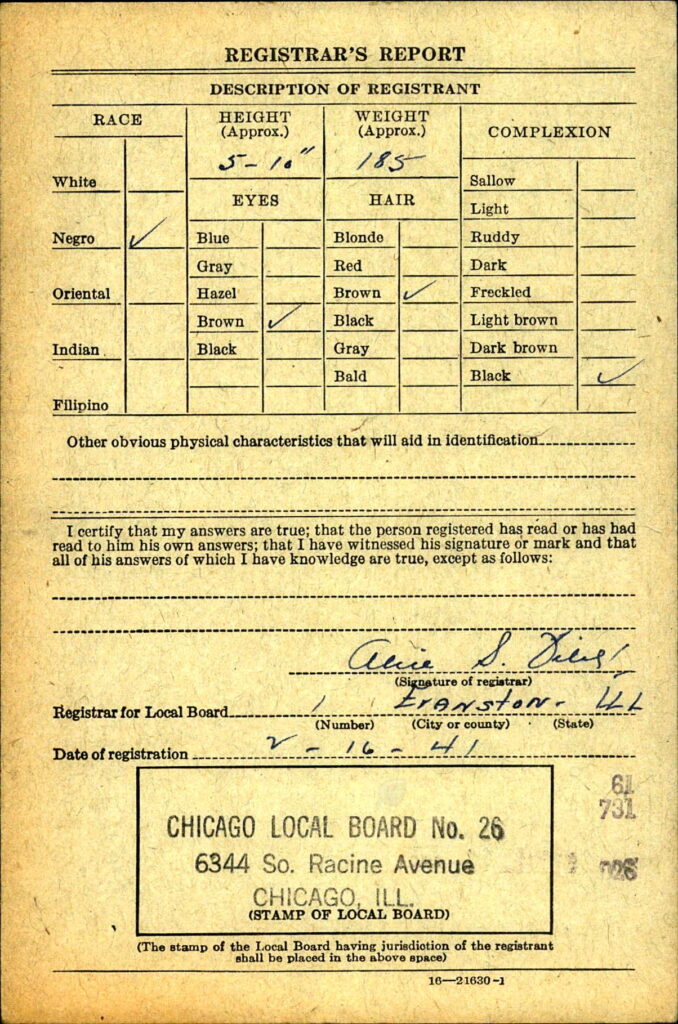
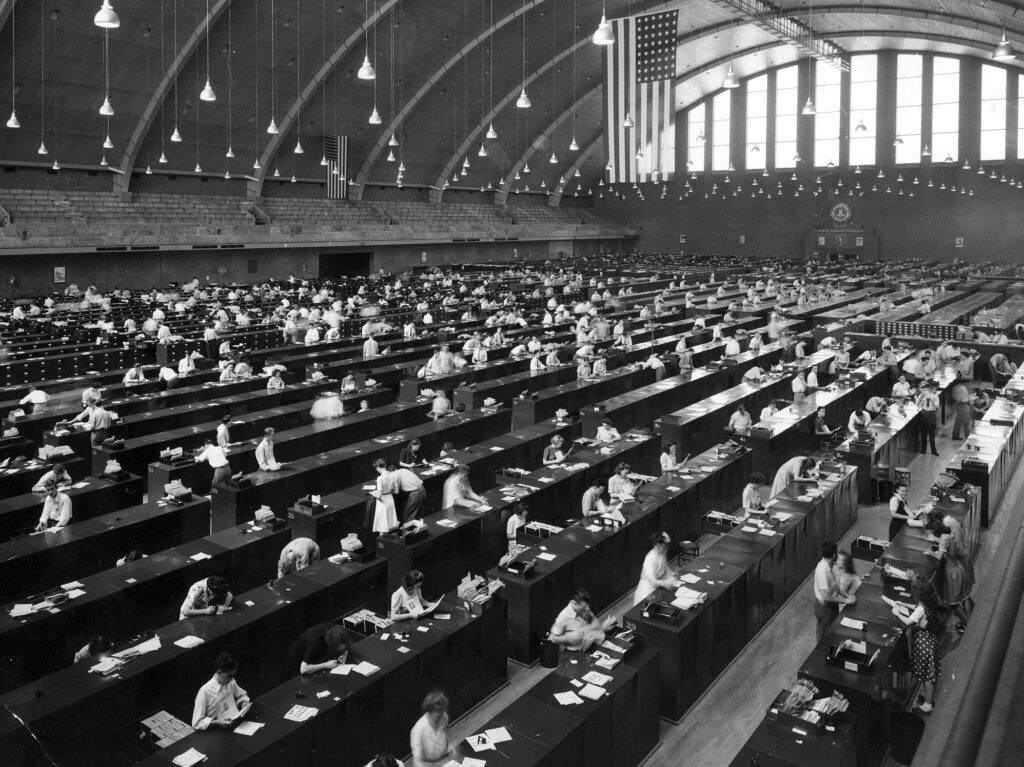
The United States wartime mobilization included 16,000,000 in uniform. In addition to factories, logistics, and communication networks, all individuals must be traceable for pay, qualification, and recognition. The Federal Bureau of Investigation managed fingerprint records for all of the inductees into the military added to the criminal and prison population fingerprint system.
Individuals on the battlefield were increasingly identified by durable insignia, uniforms, equipment, identification tags. Care/control for armies, prisoners, wounded, deceased worked within growing administrative organization. Prisoners were numbered, even tattooed. Refugees were listed and controlled. “Name, Rank, and serial number’ to permit identification and communication, medical and physical records, dental charting, laundry marks, personal effects, photographs, official stamps and papers, dates of birth, hometown, family contact data.
These variables all collected and employed to serve the prosecution and aftermath of war. Remembering the patriotic veterans, dead, family sacrifice and social tragedy of conflict
~1940-1950 politics & global forensics
individuals and identities
The 1940s, a turbulent decade+, saw identification sciences and their legal application in service of justice, comfort, recognition, and remembrance. The prosecution and recording of war documented the tragedies including realtime and emerging events. These investigations and reporting applied legal and journalistic techniques to reveal, publicize, contest, and polemicize the prosecution of war. Examples like the Katyn Massacre, the Nanjing Massacre, the Liberation and recovery of Dachau illustrate both the application of truth seeking, preservation of evidence and contested truths.
In 1939 in the United States, the University of Chicago anthropologist Wilton Krogman published “A Guide to the Identification of Human Skeletal Material” in the FBI Law Enforcement Bulletin. This collected understanding of the human skeleton from anatomists, human evolution study, archaeology, museum collections and criminal cases.
Even remains reduced to bones could be individually known. Nations and peoples sought to search for all traces, at least memories of what was done, and who was lost.
~>
The United States American Graves Registration Service of the Quartermaster Corps held responsibility to collect identify and manage the American dead. The British Commonwealth established commonwealth cemeteries overseas, and the RAF pursued answers with the Missing Research and Enquiries Unit. The 1906 and 1929 Geneva Conventions guaranteed certain duties and responsibilities for sepulcher and dignified treatment of the dead. The postwar global politics aimed to establish more humane and dignified treatment for all peoples
- 1948 Universal Declaration of Human Rights
- 1949 Geneva Conventions
- 1945-1949 International Military Tribunals.
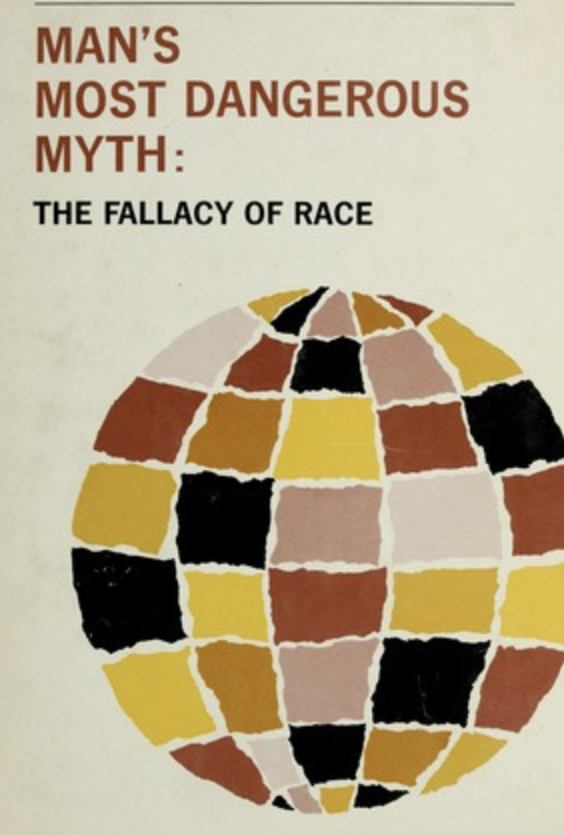
These efforts to provide recognition of common humanity, deplore aggression, and crimes against humanity also turned to sciences of anthropology, sociology, and understanding of heritage and lineage. The 1950 UNESCO Statement on Race describes a moral and scientific consensus about the meaning and usage of race for understanding groups and individuals.
Consensus about individuals… What of the deceased?
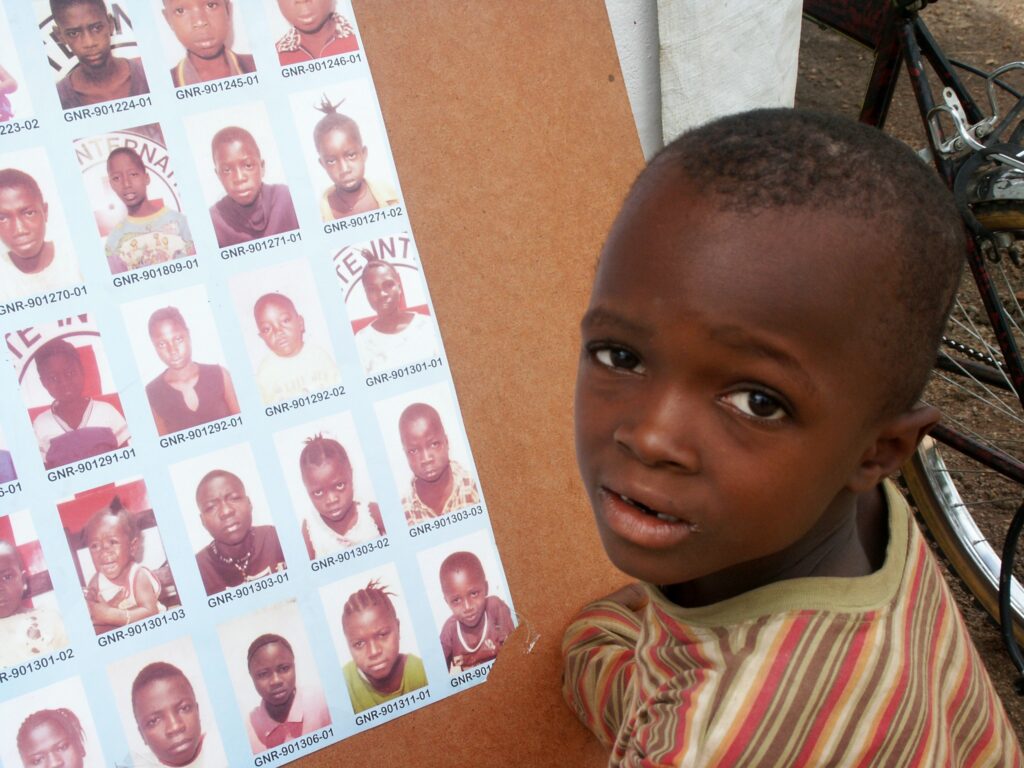
Kissidougou. Boreah refugee camp. Young boy in front of a poster made by the ICRC tracing service.
Unknown dead
Identity Variables and Lost Data
We all die. Skeletons and teeth our most enduring physical remains look very much the same one to another and lack the characteristics, expressions and charisma of a recognized loved one. Who else knew Yorick? The identification of the dead, beyond naming the deceased and documenting the history, involves matching the physical remains to these records, traces matched to traces. Fragmentary and missing data sifted and puzzled over to find matches and likelihood. The United States recovered and identified American WWII dead. 280,000 individuals as individuals and some in group identifications buried and marked with their names. By the end of active search and identification efforts in 1950, only 3.5% of the recovered dead remained unidentified. But 73,688 recorded as body not recovered, were list on tablets of the missing.
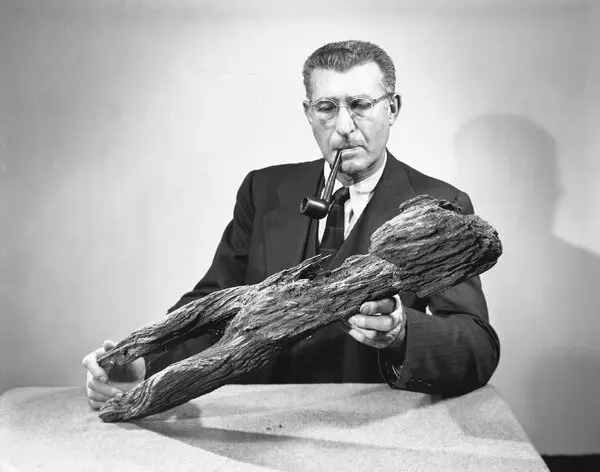
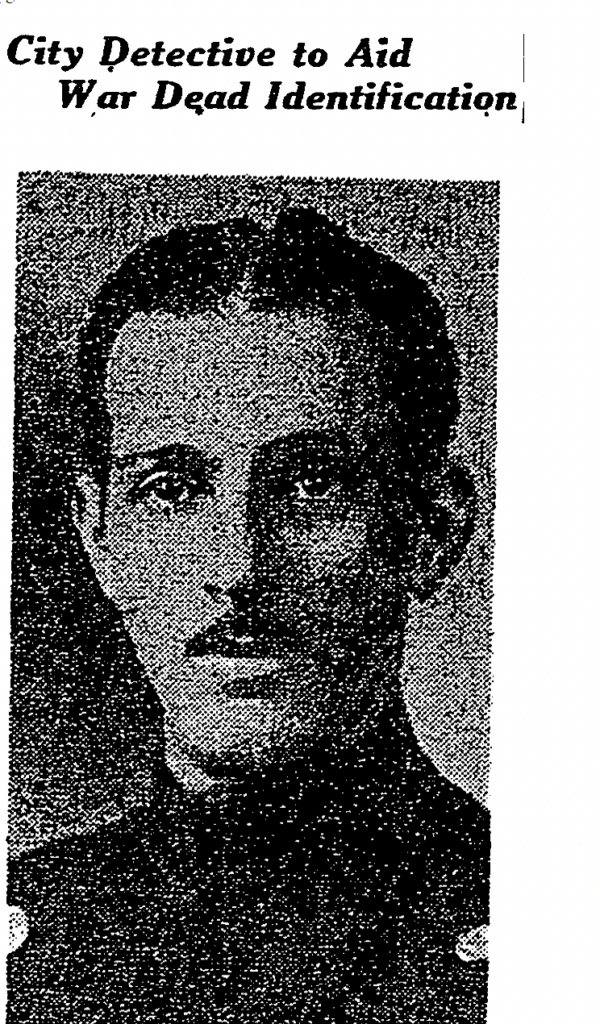
In 1946 the U.S. Army invited anthropology and police missing persons experts/authorities from New York City to help structure the effort to identify and provide final disposition to American War Dead. The program was built to centralize, standardize, and draw upon medicolwegal expertise to improve the processing of human remains. Harry Shapiro of the the American Museum of Natural History and Detective John Aievoli of the NYC Police
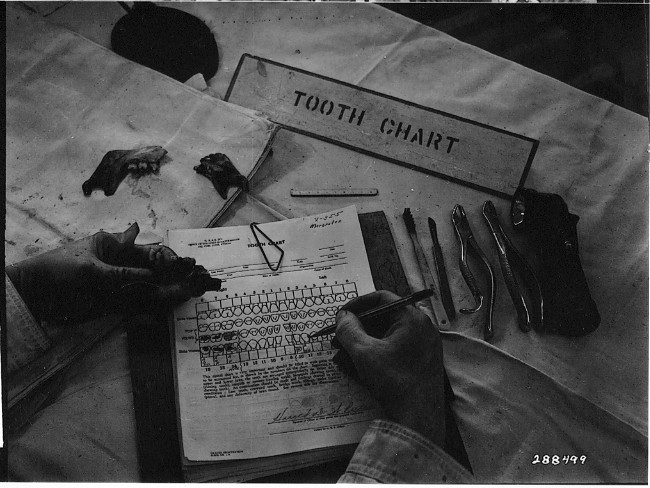
Beginning in the first World War, the United States allowed the next of kin to determine the final disposition, location of permanent burial of the War Dead. The family could select interment in an American Military Cemetery overseas on American or Allied territory, return the body home for burial in a national cemetery, or in a private cemetery. The WWII Return of the Dead program included searches for the dead and missing, scientific and crime lab processing of recovered evidence, logistical management of the dead, and communication with families. This large scale effort provides a lens for understanding who we search for, and on behalf of whom. Are the enlisted or war affected dead the property of the state or the private and treasured dead of their loved ones?
The collection of evidence including human remains from isolated burials, mass graves, rubble, fighting positions, crashed and burned vehicles, aircraft crashes, and vessels sunk created extraordinary challenges presented to emerging efforts to detect, categorize, analyze, and report on bodies, rendered unrecognizable and disassociated from evidence of identity. Anthropologists, anatomists, pathologists, and investigators worked with the tracing regimes, identity records, and clues to apply scientifically sound and repeatable techniques within a forensic and humanitarian effort to identify the deceased.
Attitudes toward death, proper treatment of the honored dead, the aftermath of racism and nationalism trends in society, including politics, science, medicine, and social movements provided a challenging world-scape for death care and justice. We often express the proper return of the dead as closure. Social and societal wounds from war, injustices, and causes and effects of human conflict have the persistence of bedsores, bones, and infected flesh. The legacies of anthropology, medical studies, museums, colonial, and racist ideologies challenged concepts of mistreatment, ethical study and handling of bodies living and dead.
Learning from dead grew the identification sciences of forensic anthropology, forensic odontology, physical/lineage/genetic identification profiling. The careful collection organization and preservation of data and evidence. The limits of these efforts created identified knowledge gaps and identities unknown. How to respect individuals, family links, human dignity, but also learn from the dead, their bodies, and establish consent and recognition regimes for best culturally and scientifically advanced treatment of one another. In the United States forensic anthropology benefitted by studies of war dead from World War II and the Korean War to improve methods and techniques for stature and age estimation. The scientists and medical professionals exposed to the large scale efforts to identify human remains applied early guidance from Professor Krogman’s 1939 guide but also established the questions and lines of research and application that professionalized forensic anthropology and medico-legal death investigation.
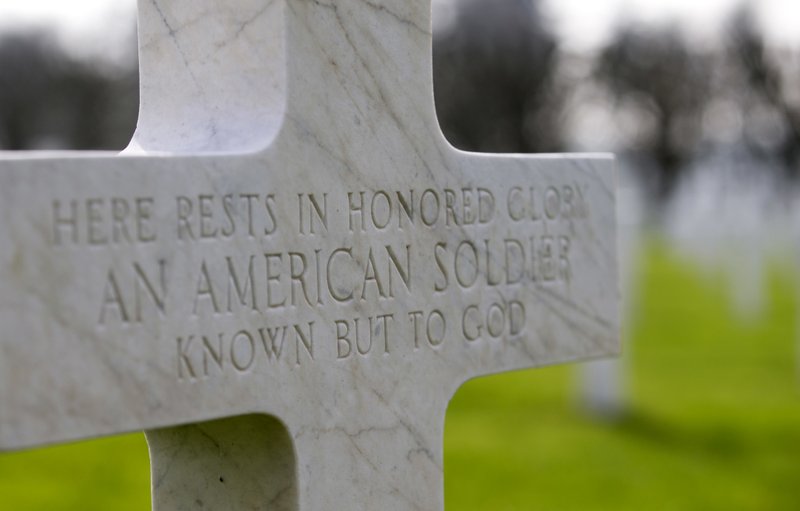
Following the first world war, selections of a single unknown to be honored and remembered as representative of all established a means of public and collective closure of a conflict. This served as a public memorial to all of the dead, and the dignity of each sacrifice made on behalf of the nations and peoples. Each one, even those names unknown and those still missing were offered peace for the state and loved ones.
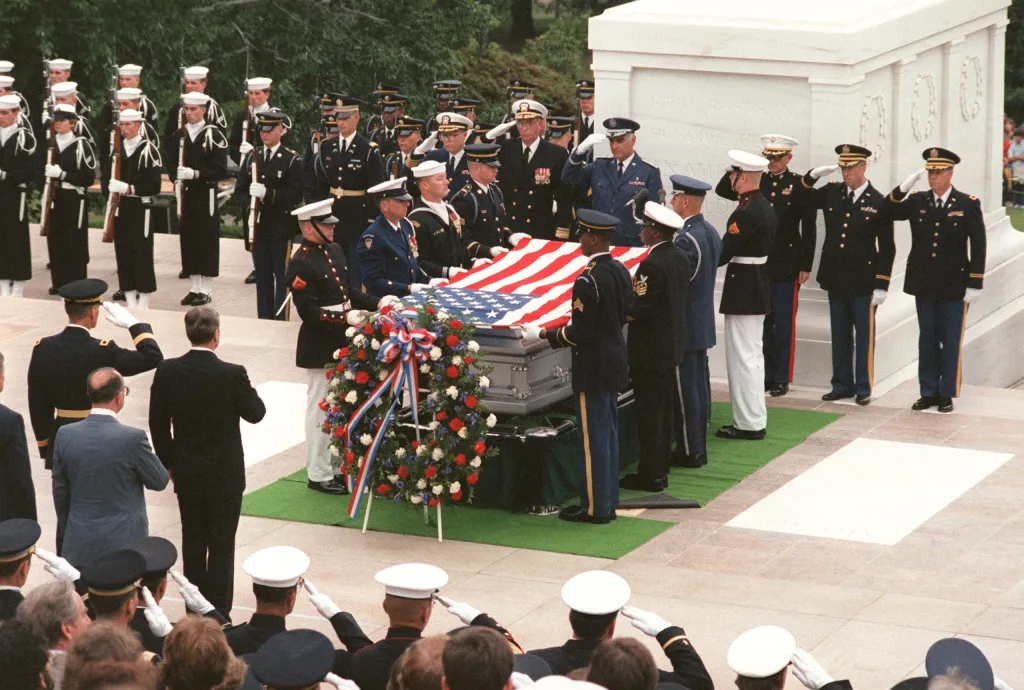
The United States criteria for the Tombs of the Unknown Soldiers at Arlington National Cemetery, were that the remains were documented as American by material evidence, uniform, insignia, location and 80% of the body complete. These tombs forever guarded as the honored dead upon hallowed ground, “Known but to God”.
US 1980-90 Politics, the Missing, and Tracing
Closure from the Vietnam War…
Approaching ten years on from the departure of U.S. military presence inside Vietnam and the 1975 abadonment of U.S. presence in the Socialist Republic of Vietnam. The prospect of normalizing and moving past the social and political quagmire became a political goal. In the election year of 1984, President Reagan and his Defense Secretary sought to crystalize the closure of that American chapter with the dignified ceremony of the entombment of an unknown soldier from the Vietnam War. This symbolic and patriotic marker would allow the moving on from the past.
The U.S. Army continued with the mission to recover and identify the dead. During the war, the recovered dead were processed in mortuaries and then returned to the United States for final disposition at the decision of the next of kin. Modern warfare, technology, and remote geography created a challenging context for remains recovery and identification. The homeland political controversies over the draft, the Pentagon Papers, and importantly the return of prisoners following the Paris Peace Accords. The veterans and public were deeply untrusting and resentful over the political conduct of the Vietnam War.
“Today, we pause to embrace him and all who served so well in a war whose end offered no parades, no flags, and so little thanks. We write no last chapters. We close no books. We put away no final memories.”
– Ronald Reagan, Memorial Day 1984
~>
Secretary Weinberger requested the selection of an unknown for the interment ceremony from the unidentified remains at the small U.S. Army Central Identification Laboratory in Hawaii. The laboratory utilized the same scientific and administrative model developed in WWII and the Korean War, continuing the mortuary based model distilled into technical manuals and performed by identification specialists. None of the unknowns matched the previous wars’ criteria in terms of completeness of the remains, and identifications had continued in small numbers from residual mortuary cases, and remains turnovers.
The families and widows of the Vietnam POW/MIA cases believed not to have been returned and potentially still alive in Southeast Asia, had gained a visible and potent voice among veterans and Americans who felt disrespected and forgotten from the Vietnam War.
An unknown was entombed on Memorial Day 1984, but 1985 witnessed a series of scandals and accusations about the handling and accuracy of the remains identifications of U.S. Servicemembers from Vietnam. In 1986, the government commissioned internationally renowned Forensic authorities to set the course back to trusted and defendable scientific identification
The commissioners found a laboratory using dated methods, unverified techniques, and out of touch with the knowledge gains of applied forensic sciences.
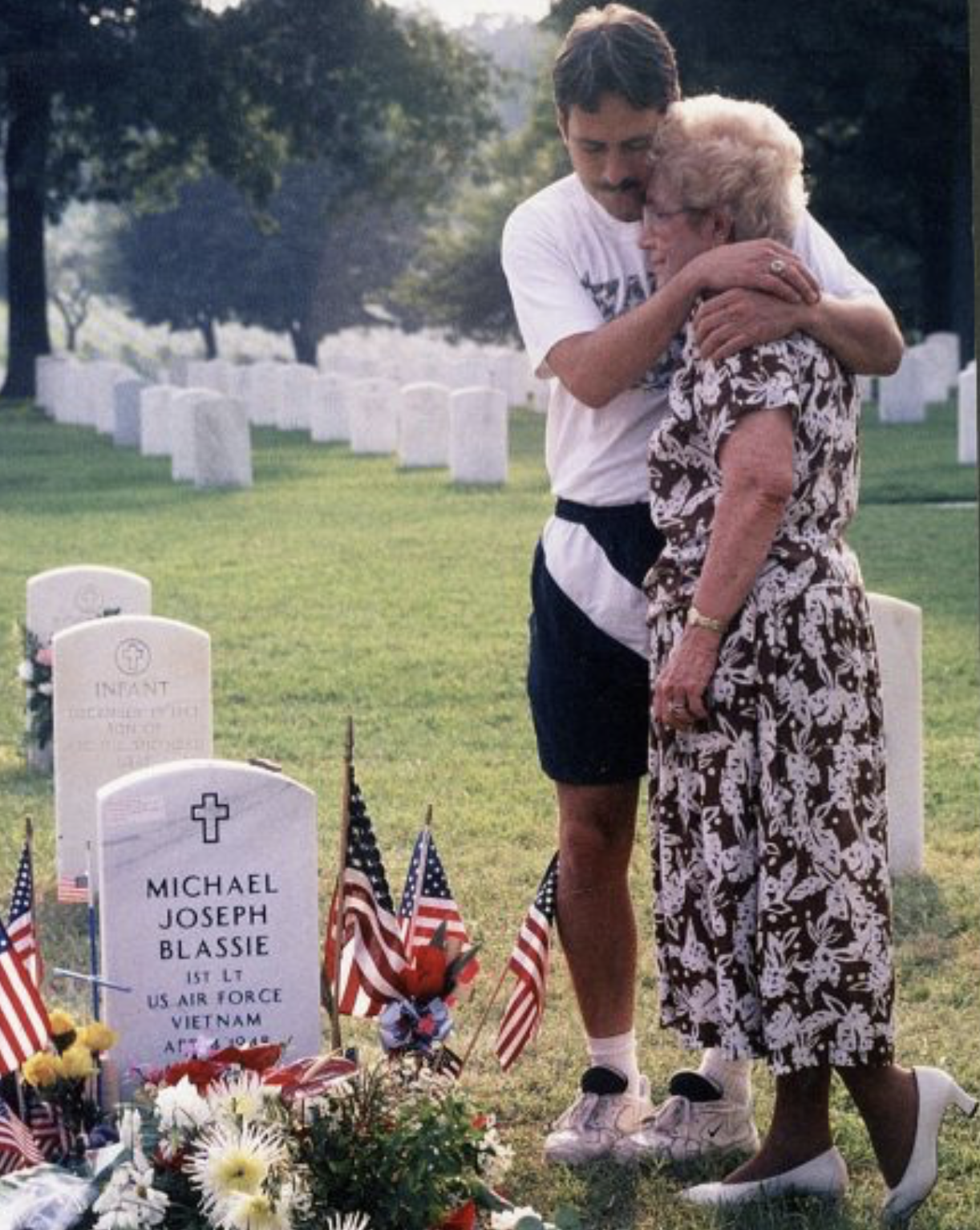
1st lieutenant michael j. blassie
formerly the Vietnam Unknown
In May 1972, the pilot of an American A-37B Dragonfly crashed in South Vietnam as a result of enemy fire. Remains were later turned over to the US Army by friendly forces and processed at the Da Nang Mortuary. In 1973, all unidentified remains from the Vietnam mortuaries were evacuated to Thailand where a Central Identification Laboratory was established at Camp Samae San.
These were now military administrative processes. The U.S. Army Quartermaster Corps managed unidentified remains from the Vietnam War. They followed technical manuals and employed identification specialists. The process had evolved into a military administrative task with inputs and presentation of data to the ranking authority. Although some of the mortuary and identification staff had been involved in WWII and Korean War identification, the identification sciences and forensic specialization had changed dramatically in the academic and non-military medico-legal spheres.
In addition, public and family expectations had built a powerful poiltical base to change the adminstative accounting for the dead into one based around the families and loved ones of the missing and the dead.
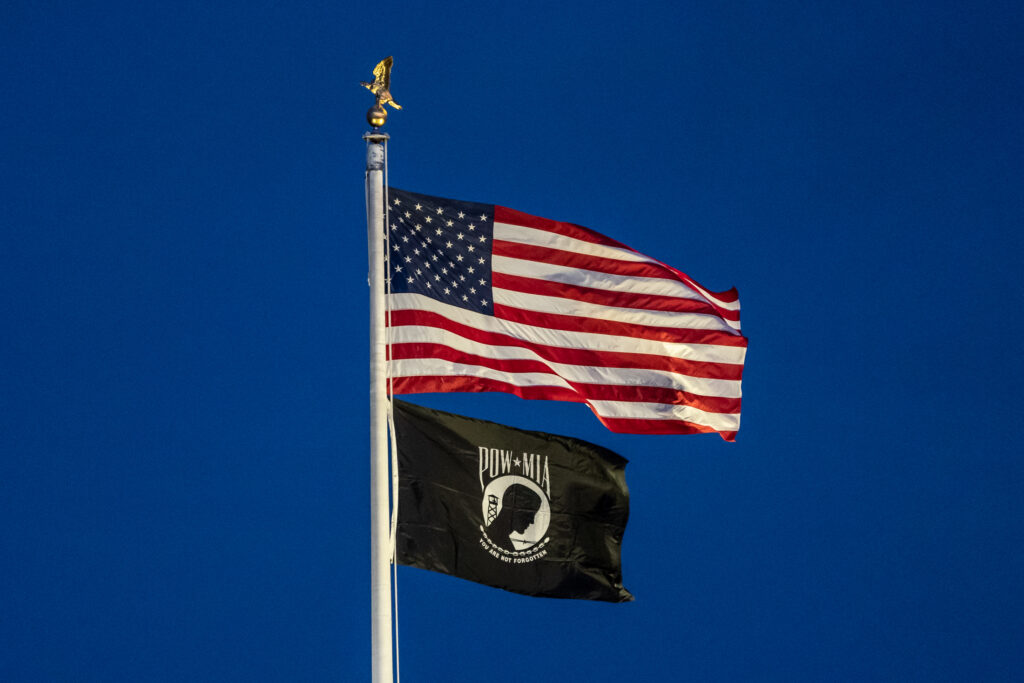
Families – women founded The National League of Families of American Prisoners and Missing in Southeast Asia and incorporated in the late 1960s They powerfully advocate on behalf of the families and loved ones of those missing, prisoner, potentially prisoner, and potential living to this day. It is their flag that now flies just beneath America’s Flag as a commitment “You are not forgotten”
It may be that forensic science has reached the point where there will be no other unknowns in any war.
—William S. Cohen, U.S. Secretary of Defense, 1998
~>
Veterans and family members held information hard-won independently of official channels and through rallying political pressure for hard facts. The families and veterans groups knew that the remains designated X-26 from Da Nang Mortuary had circumstantial and material evidence associated with Lieutenant Blassie.
The renowned forensic scientists had begun evaluating the CILHI procedures and methods in the mid 80s. In 1987, Dr. Ellis R. Kerley became the Senior Anthropologist or Laboratory Director. In the early 1970s Dr. Kerley and Dr. Clyde Snow had established to the Physical Anthropology Section of the American Association of Forensic Sciences.
In 1955-56 Ellis Kerley had worked at the Kokura, Japan based Central Identification Unit to identify Korean War dead evacuated to Japan for processing. All war dead from that conflict were returned for final deposition in the United States at the direction of the next of kin, or if unidentified in the American Cemetery in Honolulu, Hawaii with a single unknown entombed at Arlington National Cemetery. Kerley had subsequently obtained his PhD from University of Michigan had worked with Army Pathology and then as a professor and practicing forensic anthropologist, founding the American Board of Forensic Anthropology in 1979.
The dynamics of the formerly administrative identification methods built on procedures and protocols trapped in the past and resistant to innovation changed the scientific culture of the identification processing. The Laboratory grew in professionalism and board-certified forensic staff. Advocacy from the public ultimately led to the 1998 exhumation and identification, confirmed with DNA testing, of the Vietnam Unknown now forever named as 1st Lt Michael J. Blassie.
humanitarian forensics
“humanitarian forensics represents a critical intersection between science and compassion in
addressing some of humanity’s most pressing challenges
during times of crisis” – Anand Mugadlimath
International Journal of Forensic Sciences, v.9 no.4, 20241
The application of science, service of expertises, the democratization of data, the valuing of lives and memory, the story of unknowns had turned from state control to a validation of a common human understanding of duties we owe the dead and the living. ‘One to represent them all’ had shifted to compassion from each to each.
Regimes of systems of identity, association within groups, within states/nations, as part of an organization, institution, genetic line, or family tree. There are sadly many millions of people who are missed and with whereabouts unknown to loved ones and authorities. The identification sciences built upon analysis of traces requires an enormous effort to meet the challenges of so many missing, not to be forgotten, and support and care for the ones who miss them, even if having never known them, and most crucially those who loved and were loved by them. Humanitarian Forensics as the name implies deploys the tools and methods of state level surveillance, medical, anthropological, scientific and legal regimes to work to provide dignified and appropriate death care for the deceased, to provide answers, and certainty that details are remembered and human remains can be be identified.
Systems of identity proving and controlling, turned to the justice of providing answers and acknowledgment of the value of an individual. Separated from justice for cause and effects, humanitarian forensics like other humanitarian action is provided as duty of sepulcher and respect for the dignity of each life.
The ability of forensic practitioners to provide answers based upon training alongside dead bodies has greatly advanced. Still searching for the missing, from natural and human disaster, conflict, crime, migration, enforced disappearance, even just running away is highly complex and situated in challenging contexts. The personal, social, cultural, political spheres fraught with emotional and frantic overload. The missing echo through generations and the fractured identity of individuals with a missing child, parent, loved one.
This intersection of the humanitarian and the compassionate forms a thread, a stream that flows through the identification sciences, beyond their traces in state discipline and ordering of individuals into categories of control as soldiers or criminals, as refugees or the oppressed. This thread comes from the commons of loss, of ambiguous death, or hopes of rediscovery, of reconnection. Skills blended from science within governmental institutions and families or individuals devoted to knowing the truth, the answers about the one they miss. The humanitarian impulse of recognizing and honoring the deceased, the duty of tending the body and its conclusion as a living presence.
Searching for the missing, responding to discovery of bones and traces, dignified treatment, providing answers and frameworks for interpreting what can be said, what must be said. In global contexts people are missing, people have been lost, remembrance postponed and faded. Humanitarian forensics draws upon the knowledge base of the forensic sciences, the traces of human lives in archaeological or crime scene contexts, the traces of documented lives, citizenship, service, aircraft and ship manifests, missing posters, and last seen reports. The term forensics attaches to societal justice, to the reckoning of causes with effects, truth and judgement. This term attached directly with humanitarian points at a small more individual justice, the reunion of the missing and the rememberer, the dignity we owe to one another as the people who live and die.
How can we get the right clues and traces together with the people who can make sense of them, or provide them at long last to those who seek no understanding just comfort from the pangs of missing and trauma of a person lost.
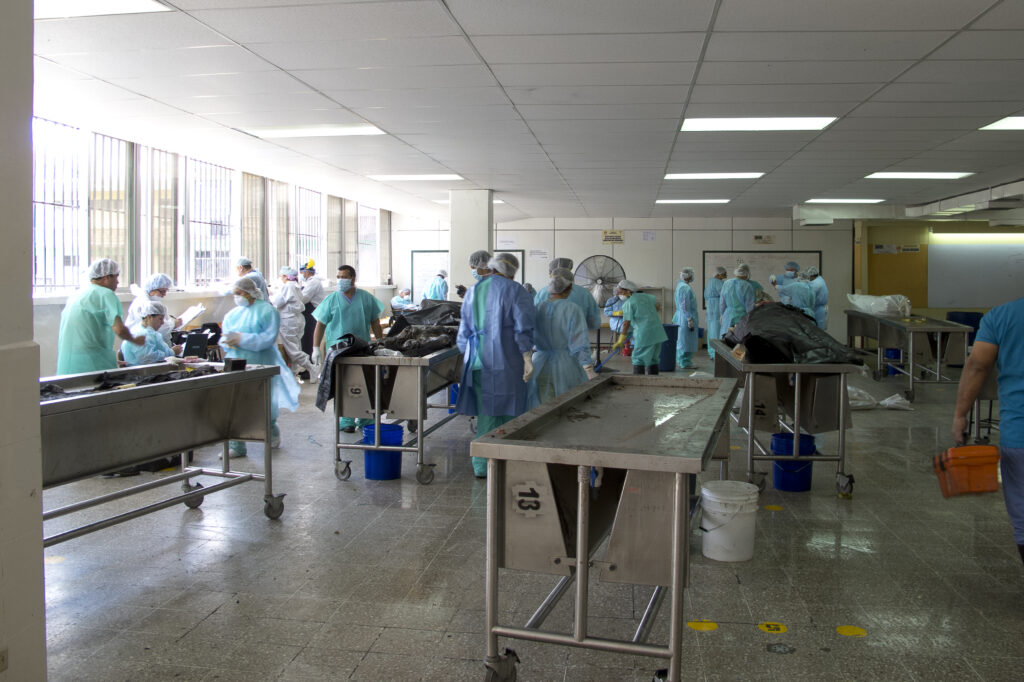
Honduras: the challenges of identifying the victims of the Comayagua prison fire
Forensic data management
Investigating and Tracing
The management of the dead, searches for missing people, and identifying human remains demands an understanding of how to search, how individuals have been known, organized among the masses, yet unique by name, by data, by lived ephemeral moments alone and shared with their loved ones or pains inflicted upon them.
Data management for humanitarian forensics requires organization, preservation, and discoverability of overlapping, fragmented, and unrecognizable details. The activity of the event or events that led to a person becoming missing, the data available, both that information available at the moment of loss and the recoverable data and matrices that can be sifted for clues. Missing persons cases have much missing data amid the complex weaves of humanity, geography, and marching time. Recovered evidence, data of those that were found, procedures and systems available then and now to provide foothold to investigate and advance a case.
~>
Missing persons as we understand them today, are reported to the authorities, to friends, posted on signboards, listed on records from disasters, calamities, conflicts, and desperation. Each context has unique challenges, but long term missing persons require investigation and review of before and after data, last known location, hospital lists, police records, military records, transportation and border data. Data for recognizing them even if they cannot intelligbly speak their own name or have succumbed to grievous injury, exposure, or hidden in a clandestine grave.
The challenge, that direct paths to answers, the straightforward explanations, the Occam’s razor solutions, and fortunate discoveries solve almost all cases, especially with prepared and well qualified expertise. The long term missing, mass casualty responses, post-conflict, and cold cases share the characteristic of missing data, challenges of access, authorities, and support.
Listening for the dead to answer, we turn to the lessons of the history and current application of the dead teaching the living.
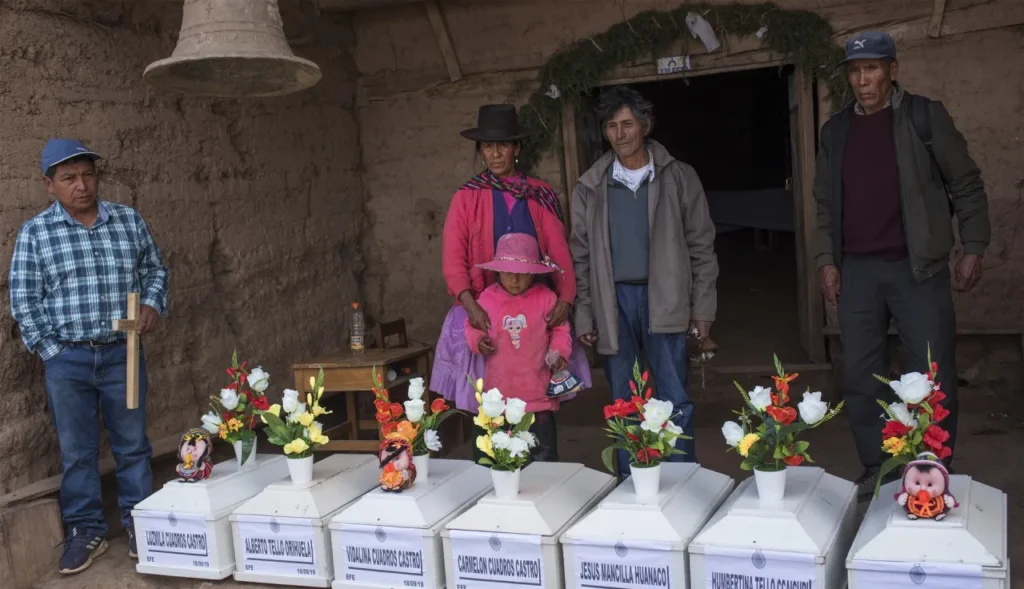
Identity variables
Missing Data & Managing Traces
Missing persons cases begin with many questions. The collecting, structuring, and usage of the data willl need to support many questions requiring answers. Following the data management approaches of identity records discussed above, having categories, indexes, catalogs, and large data storage are vital to keep data ready to help form and answer the diverse questions asked by loved ones, authorities, investigators, and the public.
Who witnessed the event?
Where is the suspected location?
Where are the medical and dental records?
Are there photographs, maps, or DNA profiles and references?
A hallmark of longterm missing person cases is lots of missing data. Many of these questions have been asked but the answers were negative, incomplete or impossible to interrogate. “The best witness died three years ago, maybe their child remembers what they had heard them say.”
The recovered evidence is always a small subset of the universe of clues. Complete bodies, forensically recovered evidence, and searches of records in archives may be complete yet difficult to piece together an answer to the question of the identity of recovered human remains. Often the cases involve broken, fragmented, burned, and lost records, and obscured incomplete puzzles that troubled the seasoned professional.
Acts of tracing involve multidisciplinary and expert investigation The management of this data must include approaches that provide for multidisciplinary teams to discover the available data, contribute analyses and descriptions, as well as programmatically advance together the individual cases and caseloads.
~>
However, the data planned for, collected, operationalized, shared, reported, and preserved for seeking the missing and identifying the evidence is also sensitive, and deeply personal both to the living or the deceased individual as well as the families and procedures of the authorities and humanitarian workers. Do the people who know you best know the subtle variation of your bones and teeth? Are there buried secrets in your lineage and names? Did anyone ever see you after you left your village, or see you stowaway aboard the vessel? Can the authorities be trusted with your DNA and all of your families?
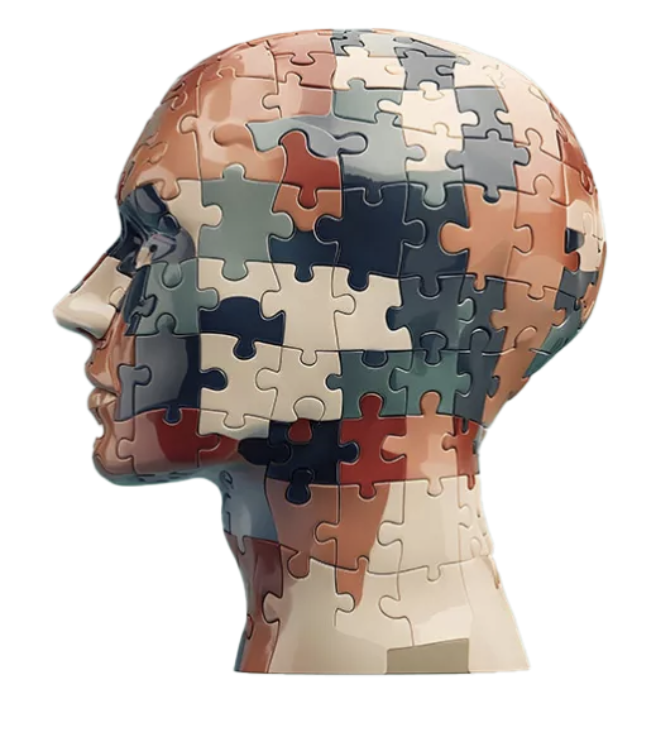
Key Points for Humanitarian Forensics and Management of data of the missing and unidentified.
- Answers and inquiry must aim at demonstrated care for the missing person or recovered human remains and those who most miss them.
- Transparency of methods, techniques, and qualifications of expertise
- Cultural understanding and dignified handling of the deceased and any recovered evidence
- A commitment to communicate answers and interpretation of available data and records
- Sensitivity to handle delicate and fraught situations including personal, cultural, institutional and political
Data quality, data accessibility, and data trust have some specific levels of importance at all stages of a lifecycle of activity for any missing person case and specifically for the long term missing a decade on or longer.
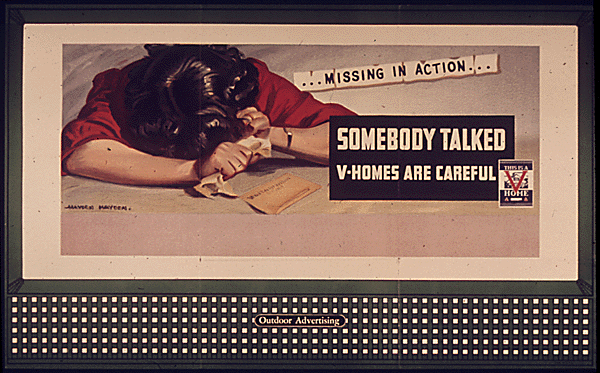
Who knows us, To whom do we belong
Traces we are, and traces we leave…
In contexts where authority is contested, where status is fluid, where identity is understood as either imposed or lived, these issues affect how we seek traces and interpret the tracing of identity.
When you lose someone, have you lost their fingerprints, or their touch? Do you miss a recording of their voice, or their answer to your call. Does finding their census record or enlistment card teach you about them? Do you trust that you will know and accept the returned remains? Do traces make up the whole? Are we left only traces?
This essay surveys the historical and present people tracing regimes and the application of our knowledge and experience to discover and remember the dead as individuals. The awareness of the impact and echoes of lives through traces used to organize our lives and recognize our personhood. There are many avenues and lenses to study these efforts, within the historical, political, and scientific contexts.
The work of humanitarian forensics is a part of the death care for societies’ members at their most grievous return to dust.
Difficult political questions arise, who is worth searching for, what is the duty owed to the deceased, the duty of sepulcher, proper and dignified management of the dead (is management is too business like). There is also a duty of remembrance, even absent the body, there is worry over forgetting, there are lessons to being remembered, understood, at rest. Death is also personal.
The questions around the institutional and scientific approaches to learn from death, the aftermath of disasters, the terror of wars, victims of criminality, diagnosing the causes and manners of death. Is it important also to name the dead? Do we just tally the numbers, match piles of numbers and lists of the victims, greatest earthquake by toll, every casualty counts, even if they were too young to name.
Instead do we learn that these some types of vehicles need better safety features, make improvements to lifeboats, recognize the dehumanization of potential victims, document the abuses at the hands of nation states and domestic partners, parents and children?
Is there a right to disappear? A right to be forgotten, do the dead have privacy? Do they need to say so, while judged competent before a notary before death? We search for the living, but the living may assert they do not wish to found. When we search for and seek to know the dead, we get no response from the dead, if we speak for them, what gives us the right to do so?
These answers can be buried in unmarked graves, undignified disposal of secrets, of those who can or must be forgotten. Does digging up the past disturb or seek justice. Can justice and authority give way to basic decency? Do the dead keep their secrets? or teach the living?
Mortui Vivos Docent
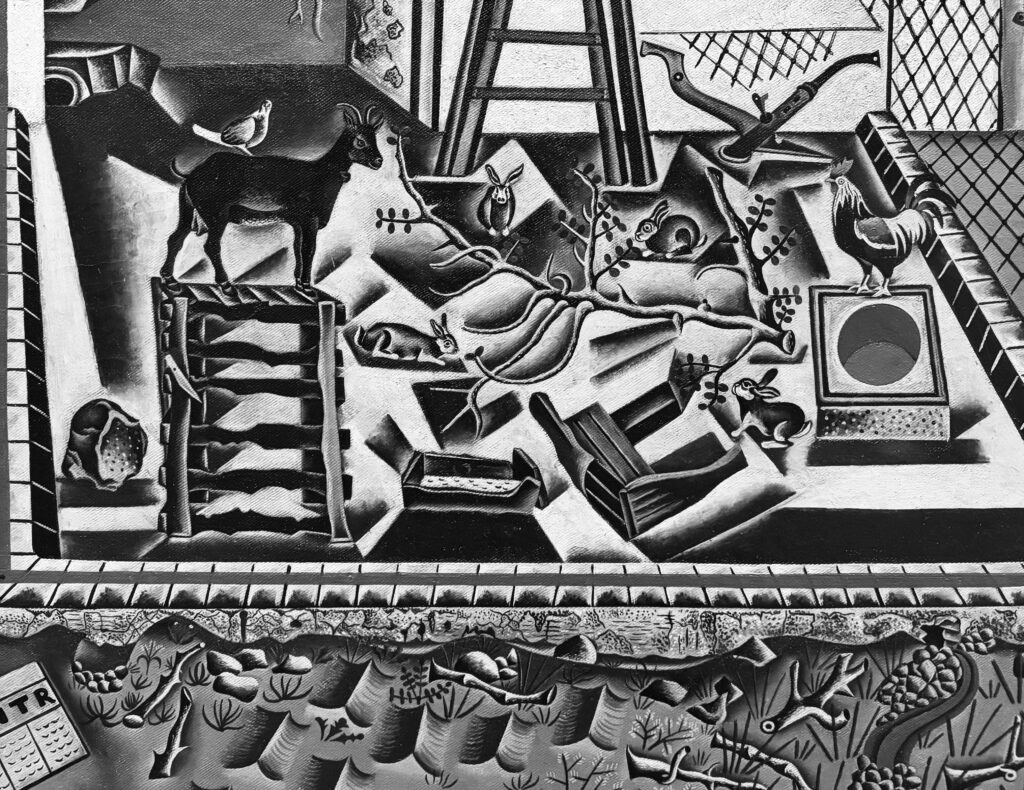
Individuating…
Lives are just little things, brief, temporary, glimpses, fleeting, attached to streams, to times, to brilliances, to dark, to physicality, to emotion, to remembrance.
Tracing Missing Persons Past and Present: lessons from managing data of missing persons in humanitarian forensics
Past and current, global and local crises leave many people displaced or missing. They are missed by family, loved ones, social networks, and societies. The technoscientific work to assemble traces that support return or identification of the missing is the principal goal of humanitarian forensics. This examination draws from the historical development of forensic sciences applied to recovery and identification, best practices in forensic data management, and the unique challenges of tracing the missing, the collection of recovered, often fragmented, evidence to support identification or resolution. Drawing from fieldwork, laboratory work, and archival research I will discuss the organization of testimonies, documents, images, geospatial, biological, laboratory, and genetic data used in humanitarian forensics. The presentation follows examples from the development of 20th Century identification sciences, multidisciplinary approaches to tracing missing persons, and current ethical and principled approaches to this work. Humanitarian forensics includes work on the long-term missing, natural disasters, current conflicts, migration, mass casualty events, enforced disappearance, and criminality. Each individual case and preparation for the management of the dead and missing demands our attention and concern for the individuals and societies affected by ambiguous loss.
https://aias.au.dk/events/workshop-the-politics-of-traceability
Chris McDermott
Historian & Data Professional
IDENTITY VARIABLES
- Mugadlimath, “Humanitarian Forensics.” ↩︎