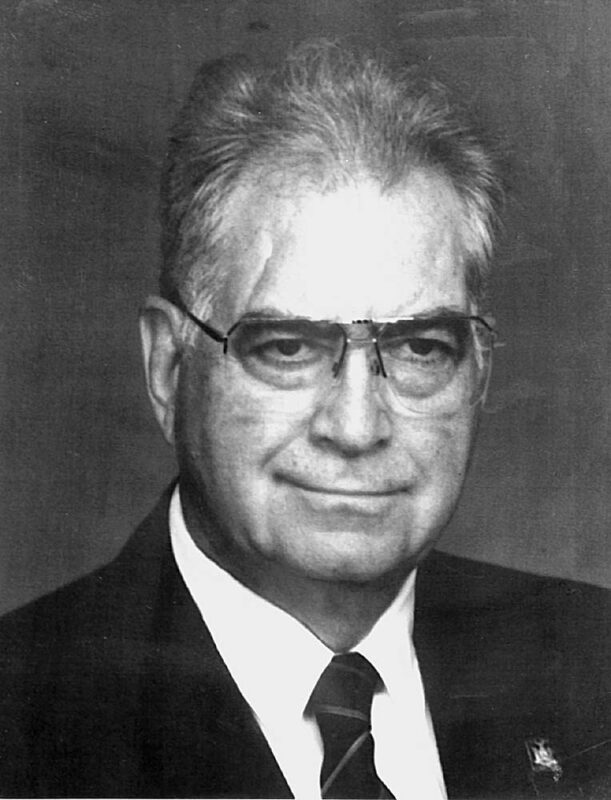
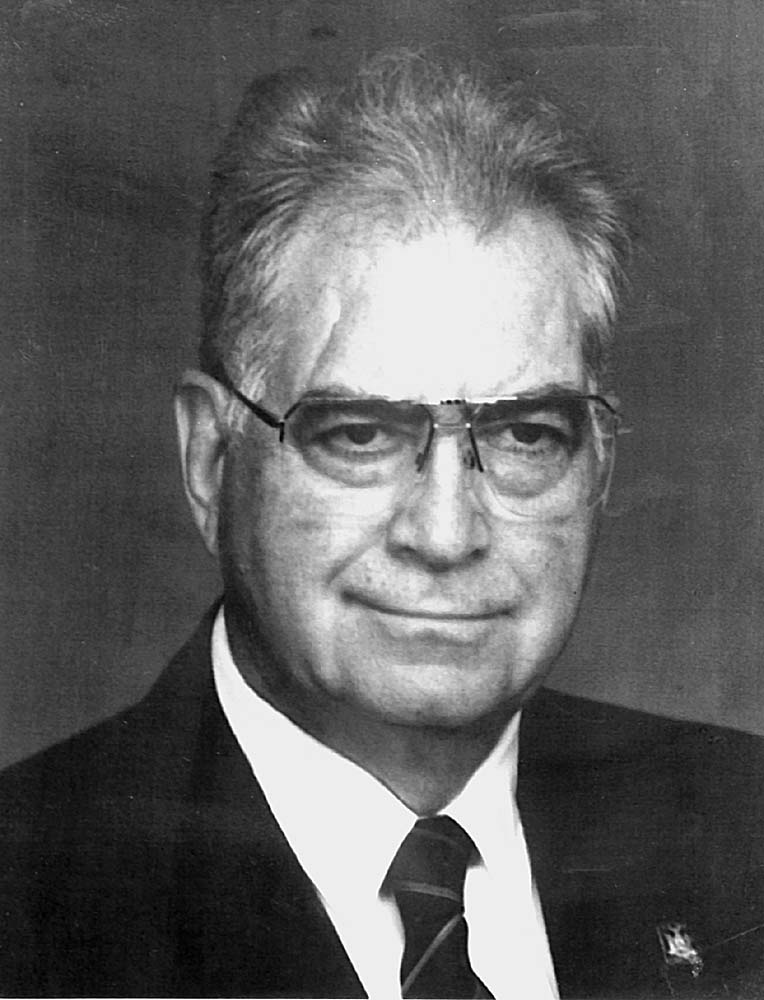
Ellis R. Kerley, born 1924 in Covington, Kentucky across the river from Cincinnati. Attended the University of Kentucky, graduating in 1950, (likely studied under Charles E. Snow, PhD). Kerley was an anthropologist at Bowman Gray School of Medicine in Winston Salem, North Carolina. This may have been one of the first appointments of an anthropology graduate at a Medical School. Kerley joined the Korean War Dead Identification work at Kokura, Japan. His research there informed his Master’s degree from the University of Michigan in 1956, and then his teaching fellowship at Michigan. In 1957 he began work as a physical anthropologist at the Armed Forces Institute of Pathology, on the campus of Walter Reed Army Medical Center, in Washington, DC. He completed his doctoral degree in 1962, under Frederick P. Thieme, PhD (Anthropology). Dr. Kerley died of leukemia in 1998.
1973, Co-founder of the Forensic Anthropology section of the American Academy of Forensic Sciences
1978, Diplomate #1 of the American Board of Forensic Anthropology
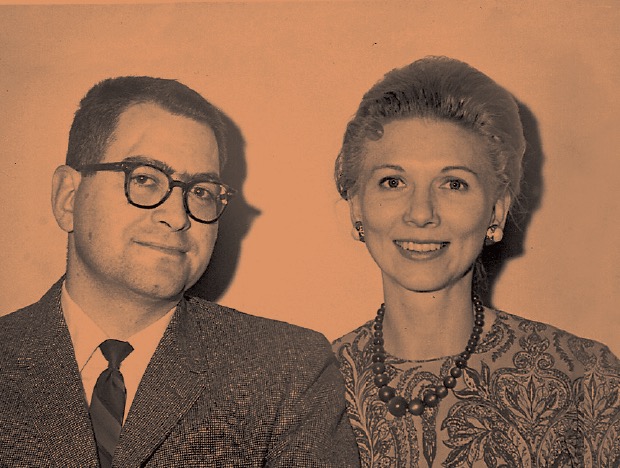
Early Years – Physical Anthropology and War Dead Identification
Born (1 September 1924) and raised in Covington, Kentucky, across the rivers Ohio and Licking from Cincinnati, Ohio. The Army drafted Kerley as an enlisted man, in October 1942. He also registered for the draft in December 1945. He attended the University of Kentucky, and received his B.S. in 1950. At Kentucky, he likely studied under Charles E. Snow who identified U.S. war dead at the CIL in Hawaii, and had received his doctorate from Harvard directed by Earnest Hooton. Pursuing further training in Anatomy and Anthropology, from 1950-1953, Kerley found employment as an anthropologist at Bowman Gray School of Medicine’s Department of Medical Genetics. While in Winston Salem, NC, Kerley studied the genetic, serologic, and anthropometry of an ‘inbred’ mountain county population. In 1952, Kerley and Herndon presented this work, Cousin Marriage Rates in Western North Carolina at the 1952 Fifth Annual Meeting of the American Society of Human Genetics in Ithaca, New York.
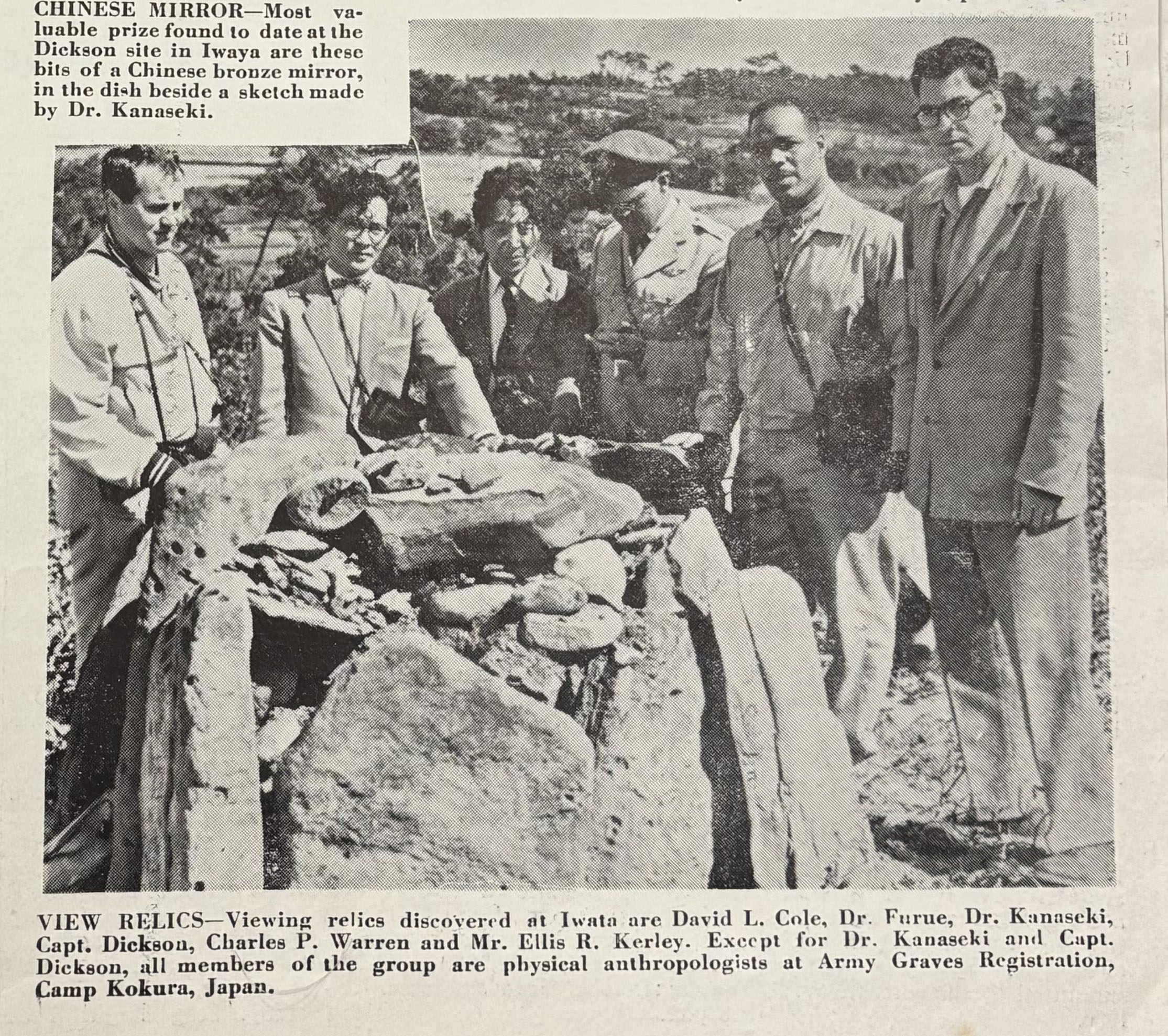
In 1954, with a bachelor’s degree and some research and teaching experience at a Medical School, Kerley joined the U.S. Army Graves Registration Service team to contribute to the identification of United Nations War Dead from the Korean War. Kerley traveled to Japan in October 1954, working at Camp Jono in Kokura. Here he worked alongside Charles Warren, David Cole, Alexander Tardy, Kazuo Hanihara, and Tadao Furue as anthropologists contributing their expertise to assist the Memorial Division identification of the dead. Kokura CIL
This post war effort was highly successful and built upon the war dead identification efforts that were wrapping up after WWII, and introducing more advanced research programs, from the Army Climatic Laboratory (Russell Newman and Thomas McKern). and highly visible scholars like Mildred Trotter, T. Dale Stewart and Marshall “Bud” Newman. Mildred Trotter, a renowned anatomist from Washinton University, St. Louis, had worked at the Hawaii CIL, following Charles E. Snow and at Manila reviewing and examining work performed by Charles P. Warren. The major advances for forensic identification was able to connect postmortem data with the military antemortem data to support advances in stature estimation Trotter and Gleser and age progression McKern and Stewart. The anthropologists working on the War Dead identification program were encouraged to develop and advance their own research. Kerley’s research proposal demonstarted his ability to contribute. Despite the encouragement and opportunities to advance other proposal, the Army was set upon supporting the Anthropometric and advanced work underway with the Anthropologists on staff at the Army Anthropometric labi in Natick, Massachusetts. Kerley was the only scientist approved for membership in the American Association of Physical Anthropology AAPA in 1956.
Also in 1956, Kerley was awarded a Teaching Fellowship in Physical Anthropology at the University of Michigan. At Ann Arbor, Kerley worked as a Research Assistant in the Heredity Clinic and Physical Anthropology Laboratory. Kerley completed his Master of Science degree at Michigan in 1956. In 1957, Kerley contributed an abstract on The Presence of Organic Structure in Fossilized Bone published in the American Journal of Physical Anthropology (AJPA), and presented at the 26th annual meeting, chaired by W. Montague Cobb and held in Ann Arbor.
AFIP to Kansas
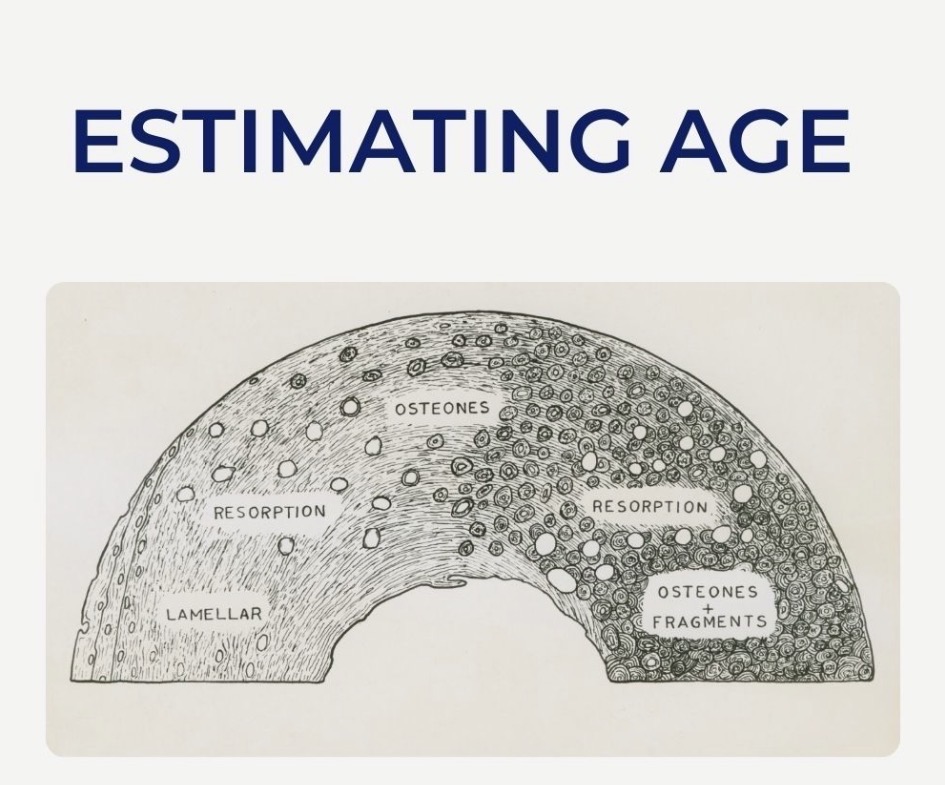
Later in 1957, Kerley found work as a Physical Anthropologist for the Veterans Administration, Armed Forces Institute of Pathology AFIP. In 1958, Kerley was invited to lecture on Skeletal Identification to the Arlington-Fairfax County Medical Association. In 1961 Kerley provided a guest lecture on Variations in Bone Structure with Age by invitation of the chairman of the Anatomy Department at George Washington University. Kerley continued his education completing his doctorate at the direction of Frederic Thieme at the University of Michigan. The topic of his dissertation was The Microscopic Determination of Age in Human Bone (1962). In addition to this work, he also provided a chapter Report of Possible Syphilis in Charles E. Snow‘s Indian Burials from St. Petersburg, Florida.
Kerley worked at the AFIP until 1966 and his work included varied and exceptional productivity. Researching age changes in bone **The Microscopic Determination of Age in Human Bone** AJPA (1965)]] evolutionary patterns, paleopathology A critical Consideration of Roentgenology and Microscopy in Paleopathology (1966) bone composition and stress fractures Histogenesis of Stress Fractures (1963), body type, bone growth, primate studies, measurement and radiometry of chimpanzees Skeletal Age Changes in the Chimpanzee (1966), nutritional effects on bones in monkeys. Kerley’s work included skeletal identification of human remains (forensic anthropology). This included consultations for the FBI, Aerospace and Forensic Pathology Branches of the Armed Forces, and for other anthropologists on paleopathology. (see NAA_ERK_papers) In 1965, Kerley became a member of the Society of Sigma Xi, he would remain a member until 1987.
Kerley’s position at AFIP included teaching postgraduate level courses on
- The Growth and Development of Bone (1959-1965)
- Normal Skeletal Variations (1958-1960)
- Normal Microanatomy of Bone (1960-1964)
- Skeletal Variations and their significance (1960-1965)
- Forensic Anthropology (1964)
- Growth and Age Changes in Human Bone (1964)
- The Identification of Skeletal Remains (1960-1965)
- The Role of the Anthropologists in Aircraft Accident Investigation (1964)
Kerley presented his research at professional meetings three times during his AFIP experience. On his histological microscopic age technique at the 1962, 31st Meeting of AAPA, in Philadelphia. On Stress Fractures at the 1963 Orthopaedic Research Society in Miami. At the 35th AAPA annual meeting in Berkeley, California on Age Changes in Chimpanzee Skeletons. Kerley provided invited lectures on many topics while at AFIP.
Invited Lectures
- The Evolutionary History of Bone George Washington University, (1963)
- Body Typing Chimpanzees George Washington University, (1964)
- Research into the Skeletal Structure of the Chimpanzee Delta Regional Primate Center (1964)
- Identification of Human Remains Frances Glessner Lee Seminar in Homicide Investigation, Harvard University (1964-1966)
- Recent Developments in Physical Anthropology Transylvania College (1966)
- The Identification of Human Remains Maxwell Air Force Base Hospital (1966)
The next phase of Kerley’s career saw his move to academia, growing as a professional anthropologist and becoming a national leader of professionalizing the field of forensic anthropogy. During the academic year of 1965-1966, Kerley returned to the University of Kentucky as Visiting Associate Professor. By autumn 1966, Kerley had resigned from AFIP and accepted an Associate Professorship in Anthropology at the University of Kansas. This Lawrence, Kansas opportunity gathered many of the professionalizing generation of Forensic Anthropologists at one place. (Bass, Birkby, Kerley, Rosen, Ubelaker, etc.) Kerley became a full Professor of Anthropology in 1969. As best as I can tell his lone supervised dissertation was Don Ortner from Kansas in 1970. Kerley then departing following the Spring 1972 academic term for a Professorship an the opportunity to build a program at the University of Maryland.
Publications
Kerley’s publications in this era continued his contributions to Paleopathology and human identification work; especially age determination. Kerley increasingly focused on forensic anthropology and the forensic sciences.
- Paleopathology: Meeting Ground for Many Disciplines with William Bass, in Science (1968)
- Age Determination of Bone Fragments in Journal of Forensic Sciences, JFS (1969)
- Identification of Skeletal Remains – Syllabus and Slides, American Registry of Pathology (1969)
- Estimation of Skeletal Age: After About Age 30 in Personal Identification in Mass Disasters, edited by T. Dale Stewart (1970)
- Recent Advances in Paleopathology in Modern Methods in the History of Medicine edited by Edwin C. Clarke (1971)
- An Epoxy Method for embedding Hair for Histologic Sectioning with S. Rosen in JFS (1971)
- Special Observations in Skeletal Identification, JFS (1972)
Book Reviews
– Paleopathology: Disease in Antiquity by Brothwell and Sandison in Science (1968)
– Practical Anthropology by Olivier in Plains Anthropologist (1969)
Kerley provided invited lectures on many topics while at Kansas.
- Identification of Human Remains, Michigan State Police Homicide Investigation Seminar (1967)
- Contemporary Issues in Medical Anthropology, Uinversity of Kansas Medical Center, (1967)
- Research into the Skeletal Structure of the Chimpanzee Delta Regional Primate Center (1964)
- Identification of Human Remains Frances Glessner Lee Seminar in Homicide Investigation, Harvard University (1964-1966)
- Recent Developments in Physical Anthropology Transylvania College (1966)
- The Identification of Human Remains Maxwell Air Force Base Hospital (1966)
While on the Kansas University faculty, Kerley presented his research at professional meetings with a marked focus on human identification for forensic audiences, especially engaged with the AAFS. Kerley established himself as a leader in the Academy of Forensic Sciences. In 1970 the AAFS – Secretary-Treasurer, Arthur Schatz mentioned to Kerley that the growing number of anthropologists could make a distinct section possible. In 1971 at the AAFS meeting in Phoenix, Kerley, William Bass, and Clyde C. Snow initiated the petition for a Physical Anthropology Section of the Academy. From their Phoenix meetings hotel room calling all of their expert colleagues in human skeletal identification to join the AAFS, a dozen agreed. Kerley approached the AAFS executive committee, who approved on the condition that the section be named physical anthropology, so that the other scientists and public understood it was not the other – more social fields – within Anthropology.
After the founding of the AAFS, in 1950 a physical anthropologist Wilton Marion Krogman. joined as a Member at Large. The Academy did not know quite where to place Dr. Krogman, but they knew his expertise filled gaps and connected to many other lines of effort (Medical, Pathological, human identification, and other areas). Since 1951, Krogman was aligned under the Criminalistics Section. In 1968 in Chicago, Kerley joined the Academy in the Pathology/Biology (Path/Bio) Section, and approved as a Fellow in 1970. Krogman’s student William Bass (Kerley’s Colleague at Kansas) and Clyde C. Snow, (who worked with the FAA), had also joined the Path/Bio section Academy of Forensic Sciences. The Physical Anthropology Section was approved in 1972 in Atlanta with 13 newer members from the General Section, including the transfer of Wilton Marion Krogman from Criminalistics.
Presentations at National Meetings
Age Determination from Bone Fragments, 20th Annual Meeting of AAFS Chicago (1968)
Age Determination of Adult Skeletons, Seminar on Human Identification, Smithsonian Institution (1968)
An Epoxy Method of Embedding Hair for Histologic Sectioning, with S. Rosen, 23rd Annual Meeting AAFS Phoenix (1971)
AAFS, Maryland, National Renown (Disco Era)
After founding the AAFS – Physical Anthropology Section and joining the faculty of the University of Maryland, Kerley gained wide regard for his teaching and leadership talent. Having moved to the University of Maryland, College Park, Professor Kerley now 48 years old drove the professionalizing profile of applied physical anthropology to forensic and medicolegal contexts. A renowned and popular educator, Kerley continued his forensic case work NAA_ERK_papers, but became a ‘force in the academy AAFS‘1 gaining a national and international reputation. This was a highly productive professional contribution to the defining and grounding of forensic anthropology.
Beginning as Director of Anthropology at Maryland, Kerley was Chairman of the Department from 1974-1978, and then Professor of Anthropology from 1978-1987. Kerley took sabbatical year as Visiting Professor of Anatomy at the University of Puerto Rico Medical School 1980-1981.
Publications
Forensic Anthropology in Legal Medicine Annual, 1973, edited by Cyril Wecht (1973)
The Identification of Hawaiian Head Hair with S. Rosen JFS (1973)
Forensic Anthropology and Crimes Involving Children JFS, (1976)
The Teaching of Paleopathology in North America, Paleopathology Monograph Number 1, (1976)
Forensic Anthropology, in Forensic Medicine: A Study in Trauma and Environmental Hazards Edited by Tedeschi, Eckert, and Tedeschi (1977)
The Identification of Battered Infant Skeletons, JFS, (1978)
Revisions in the Microscopic Method of Estimating Age at Death in Human Cortical Bone, with Douglas Ubelaker, American Journal of Physical Anthropology( 1978)
Recent Developments in Forensic Anthropology, Yearbook of Physical Anthropology (1978)
Foreword to Essentials of Forensic Anthropology by T. Dale Stewart (1979)
Use of the Expert Witness: Forensic Anthropology, Maryland Law Forum (1979)
Forensic Anthropology, in Forensic Sciences edited by Cyril Wecht (1981)
Forensic Anthropology: Increasing Utility in Civil and Criminal Cases, Trial (1983)
Microscopic Aging of Human Bone, in Human Identification: Case Studies in Forensic Anthropology, edited by Rathbun and Buikstra (1984)
Book Reviews
– People of the Americas by T. Dale Stewart in American Journal of Physical Anthropology (1974)
– Forensic Anthropology: The Structure, Morphology and Variation of Human Bone and Dentition, by El-Najaar and McWilliams in Olivier in American Journal of Physical Anthropology (1978)
Invited Lectures
The Role of the Anthropologist in Identification American Academy of Forensic Sciences Postgraduate Course in Forensic Medicine invited by Richard C. Froede, M.D. (1973)
Forensic Anthropology University of Tennessee (by invitation of William Bass) (1973)
Microscopic Age Changes in Bone University of Tennessee (by invitation of William Bass) (1973)
Forensic Anthropology, Forensic Pathologists Course, Toronto, Ontario, invited by Dr. Hillsdon-Smith, Chief medical Examiner of Ontario (1974, 1976)
Human Evolution, University of Maryland School of Dentistry invited by Dr Owen and Dr. Provenza (1974)
The Role of the Forensic Anthropologist, The Western Conference on Criminal and Civil Problems, (invited by Dr. William Eckert) Wichita, Kansas (1974)
The Role of the Anthropologist in Medico-legal Identification, AFIP invited by Richard C. Froede, M.D., (1976-1979)
Forensic Problems in Identification, V Semana Internacional de Criminologia Sao Paulo, Brazil (invited by Dr. Ayush Morad, Director) (1975)
The Identification of Skeletons, Scientific Approaches to Major Crimes Symposium (invited by Ed Whittaker, Director of Public Safety), Dade County Florida (1978)
Skeletal Identification, Louisiana District Attorneys Association Homicide Seminar (invited by Pete Adams, LDAA Secretary) New Orleans (1978-1979)
Seminar of Skeletal Remains, The Experts Look at the Medical Examiner and Coroner, National Association of Medical Examiners (invited by Dr. Sidney Weinberg), Newport, Rhode Island, (1978)
Death and Dying, Seminar on Death and Dying, Memorial Hospital (invited by Mrs Milton Helpern) New York (1979)
Grieving, Dying and Mourning, Fourth Irene Sachs Memorial Lecture, Montefiore Hospital (invited by Dr. Kurt Elias, Chairman of Oncology) New York (1979)
The Use of Anatomy in Forensic Science, Lectura de Centro Medico de Universidad de Puerto Rico, (invited by Dr. Miguel Schön, Chairman of Anatomy) San Juan (1980)
- AFIP & FBI
- Skeletal Variations and their Significance, AFIP (1979)
- The Identification of Skeletal Remains, AFIP (1979)
- The Role of the Anthropologist in Aircraft Accident Investigation AFIP (1986)
- Anthropology in the Identification Process AFIP Forensic Dentistry Course (1979)
- Advance Course in Forensic Pathology FBI Academy (1977-1980, 1982)
Presentations at National Meetings
Special Observations in Skeletal Identification, 24th Annual Meeting AAFS, Atlanta, Georgia (1972)
The Identification of Hawaiian Head Hair, with S. Rosen, 25th Annual Meeting AAFS Las Vegas (1973)
Sex Differences in Fingernails, 26th Annual Meeting AAFS Dallas Texas (1974)
Forensic Anthropology and Crimes Involving Children, 27th Annual Meeting AAFS Chicago (1975)
Physical Anthropology and the Forensic Sciences, 44th Annual Meeting of the American Association of Physical Anthropologists, Denver, Colorado (1975)
The Use of Radiography in Forensic Anthropology, 28th Annual Meeting AAFS Washington, D.C. (1976)
Paleopathology in North America, Annual Meeting of the Paleopathology Association, St. Louis, Missouri (1976)
Identification of Battered Infant Skeletons, 29th Annual Meeting AAFS, San Diego, California (1977)
John Paul Jones: 113 Years from Death to Autopsy, with Field and Frode, 30th Annual Meeting AAFS St. Louis, Missouri (1978)
Burning and Position at the Time of Death, 31st Annual Meeting AAFS, Atlanta, Georgia (1979)
Anthropological Issues in the Investigation of the John F. Kennedy Assassination, with Clyde C. Snow, 32d Annual Meeting AAFS, New Orleans (1980)
The Life and Death of John Paul Jones: Last Word Society, with Field and Frode, 32d Annual Meeting AAFS New Orleans,(1980)
Education in Anthropology and the Forensic Sciences, 49th Annual Meeting American Association of Physical Anthropologists, Niagara Falls, New York (1980)
Faces in the Crowd: Photographic Identification, 34th Annual meeting AAFS, Orlando, Florida (1982)
The Trinil Femur: Gunshot Wound?, 35th Annual Meeting AAFS, Cincinnati, Ohio (1983)
The Ethics of Confrontation, 36th Annual meeting AAFS, Anaheim, California (1984) #Ethics
Age Estimation from Bone Histomorphology, 55th Annual Meeting of the American Association of Physical Anthropologists, Philadelphia (1984)
“Honest, Was it Abe?”, 37th Annual Meeting AAFS, Las Vegas (1985)
The Identification of Josef Mengele, 38th Annual Meeting of the AAFS, New Orleans (1986)
Professional Service Roles
Kerley’s remarkable success connecting anthropology, at least physical, with the growing Forensic Sciences, is evidenced by his clear integration as a leader, whose charismatic and soft spoken style gained him credibility with the medical practitioners, and research scientists, and law enforcement. Kerley’s talents helping to transform scientific crime investigation into professional scientific research and training models. As a leader in the Forensic Science Foundation, Kerley led the push for Certification Boards, including the American Board of Forensic Anthropology in 1977. Kerley served as the first President of the Board, and holder of Certificate #1. Kerley received three Certificates of Merit from AAFS, 1974, 1979, and 1980.
- Fellow, AAFS – 1970-
- Member, AAPA – 1956-
- Chairman of the Physical Anthropology Section of AAFS – 1972, 1973, 1975
- Academic Council AAFS – 1972, 1973, 1975
- Executive Committee, AAFS – 1972-1975, 1984-1987, 1987-1989
- Joint Advisory Committee, Law Enforcement Assistance Administration – 1973-1975
- Chairman, Financial Management Committee AAFS – 1974-1975
- Vice President, AAFS – 1974-1975, 1979-1980
- Treasurer, AAFS – 1977-1979
- Editorial Board, Journal of Forensic Sciences – 1976-
- Secretary, Board of Trustees, Forensic Science Foundation – 1976-1977
- President, Forensic Science Foundation – 1977-1980
- President, American Board of Forensic Anthropology – 1977-1980, Director 1983-1986
- AAFS Representative to the American Association for the Advancement of Science – 1977-1984
- Special Consultant to the Select Committee on Assassinations (John F. Kennedy) of the United States House of Representatives – 1978
- Editorial Policy Board, Journal of Consumer Research appointed member by the American Anthropological Association – 1978-1980
- Scholarship Committee Chairman, Japan-America Society – 1978-1980
- Chairman, Educational Guidelines Committee. Forensic Sciences Foundation for the National Institute of Law and Criminal Justice, – 1979-1980
- Editorial Board, Forensic Science International, Copenhagen Denmark (1981- )
Forensic Leader, Return to War Dead Identification
Lab Building Successes and Headwinds
In 1985 and 1986, Kerley worked several significant consultations as a Forensic Anthropology Expert. Mengele, M.O.V.E. the NASA Space Shuttle Challenger,
Also in 1985 Kerley was asked to lead a three person review (Lowell Levine and William Maples) and evaluation of the U.S. Army Central Identification Laboratory Hawaii. This review in response to public and government concerns at the laboratory responsible for identifying the U.S. military dead from the Vietnam War. In 1987 Kerley retired from the University of Maryland and from 1987-1988 Kerley worked as a Forensic Anthropology Consultant to the Army to professionalize and improve the Army Human Identification program. From 1988 until his retirement on 1 June 1991, Kerley worked as the Scientific Director of CILHI on the island of Oahu. Kerley retired having grown frustrated and disturbed by the administrative institution of the military and the pace of change for the professionalizing laboratory. In retirement, Kerley in Hawaii and later California, continued to be a leader in the forensic sciences, and a sought after leading forensic anthropologist for humanitarian action. His last major public work was a evaluation forensic science of the International Court Tribunal, Yugoslavia (1997-1998). The New York Times published the obituary A Forensic Sherlock Holmes for Eliis R. Kerley who died of leukemia on 3 September 1998. In 2001, the Journal of Forensic Sciences JFS published a volume of papers dedicated to marking his contributions.
Invited Lectures
The Forensic Anthropologist’s Role in Mass Disasters, Forensic Dentistry Seminar, University of Texas, San Antonio (invited by Dr. James Cottens) (1986)
I. Search and Recovery Techniques
II. Methods of Skeletal Identification, New York State Police Forensic Training Seminar (Invited by Dr. Michael Baden), Albany New York (1986, 1987)
I. Identification of josef Mengele and MOVE Victims.
II. Methods of Recovery and Identification of Human Skeletal Remains, Henry F. Williams Homicide Investigation Seminar, New York State Police (invited by Superintendent Thomas Considine) Albany, New York (1987)
Identification of Human Remains, Homicide Investigation Seminar, Pathology Department, Tripler Army Medical Center. (invited by LTC Collie M. Trent) Honolulu, Hawaii (1988)
I. What is an Identification?
II. The Identification of Josef Mengele
III. Comparison of Facial Photographs, Seminar in Advanced Techniques of Identification, Spacecoast Institute for Medical & Legal Education (invited by William Maples and Jerome Hudepohl) Orlando, Florida (1988)
Exhumation and Skeletal Identification, Henry F. Williams Homicide Investigation Seminar, New York State Police (invited by Dr. Lowell Levine) Albany, New York (1988)
The Army Central Identification Laboratory, Honolulu Kiwanis Guest Speaker (1989)
Skeletal Identification, Tripler AMC, Advanced Homicide Investigation Course (invited by Sr. Collie M. Trent, Forensic Pathologist) Honolulu, Hawaii (1990)
Presentations at National Meetings
The Identification of Josef Mengele, 38th Ammual Meeting AAFS, New Orleans (1986)
U.S. Army Identification, 40th Annual Meeting AAFS, Philadelphia (1988)
Forensic Anthropology: An Applied Alternative to Teaching, 59th Annual Meeting of the American Association of Physical Anthropologists, Miami, Florida (1990)
Keynote Speech, Annual Meeting of the National Association of Medical Examiners (1991)
Profesional Service
Consultant to United Staes Marshals. Identified the remains of Josef Mengele in Sao Paulo, Brazil (1985)
Consultant to the Philadelphia Special Investigation Commission. Identified the bodies of the MOVE incident victims(1985)
Consultant to the U.S. Army. Visited the Central Identification Laboratory as head of a three-person investigating team to evaluate the CILHI Laboratory in Hawaii and recommend improvements (1985)
Consultant to NASA, Identification of the Challenger Astronauts. (1986)
Appointed to the Forensic Science Unit, New York State Police May 19, 1986 Shield #10
Consultant to the U.S. Army (1) Member of the Scientific Review Panel for the Armed Services Graves Registration Office Board. (2) Resident Scientific Director at the Central Identification Laboratory in Hawaii (1987-1988)
Deputy Medical Examiner, by appointment of Dr. Ali Hameli, State Medical Examiner State of Delaware (1988)
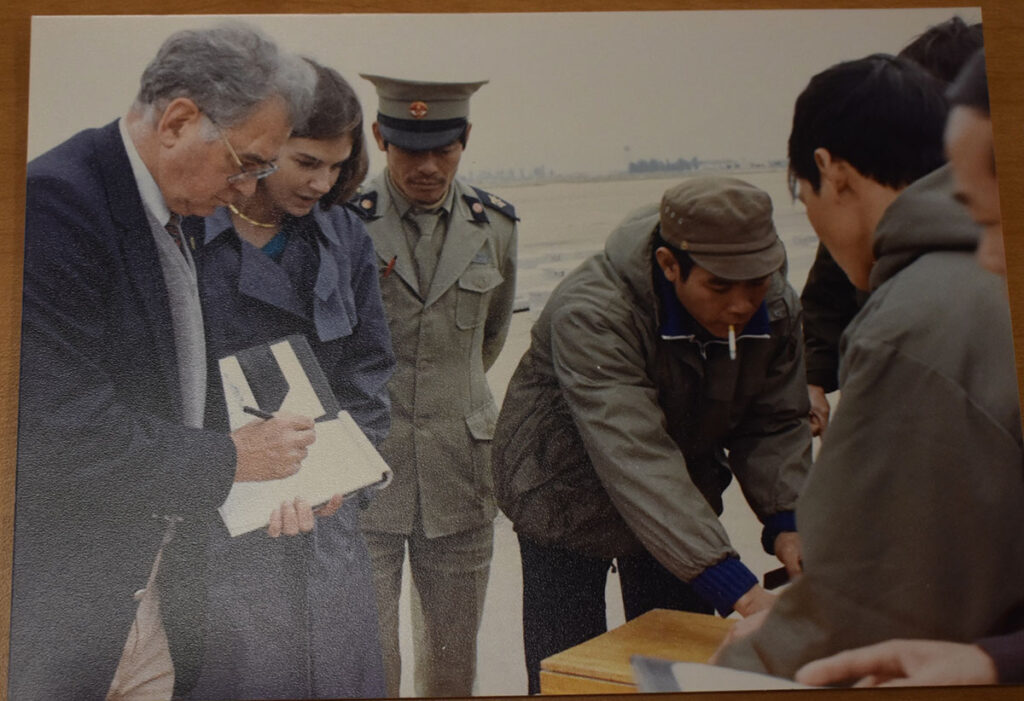
Head of Forensic Remains Examination Team, Hanoi (6 visits) and Ho Chi Minh City (2 visits) Vietnam (1988-1989)
Member, Council of Scientific Society Presidents (1989-1990)
Member, Mid-Pacific Forensic Scientists Association (1989-)
President, Maryland Chapter, Society of Sigma Xi, (1986-1987)
President Elect, AAFS, (1989-1990)
President, AAFS, (1990-1991)
Kerley’s Curriculum Vitae
data from Ellis R. Kerley Papers, National Anthropological Archives
- Ellis Royal Kerley, born Covington, Kentucky. 1 September 1924
- married Mary D. Adams, three daughters. 1
- B.S. University of Kentucky 1950
- M.S. University of Michigan, 1956
- Doctorate, University of Michigan 1962.
- 1950-1953 Anthropologist, Bowman Gray School of Medicine
- (genetic, serologic, and anthropometric survey of an inbred mountain county in NC)
- 1954-1955 U.S. Army American Graves Registration Service-Kokura, Japan
- September 1954- January 1956
- 1956-57 Teaching Fellow in Physical Anthropology, University of Michigan
- 1957-1966 Physical Anthropologist, VA Armed Forces Institute of Pathology
- Research in age changes in bone, evolutionary patterns in bone constitution and stress
- 1965-66 Visiting Associate Professor – University of Kentucky
- 1966-1969 Associate Professor – University of Kansas
- 1969-1971 Professor of Anthropology – University of Kansas
- 1972-1974 Professor and Director of Anthropology (Sociology Department)– University of Maryland
- 1974-1978 Professor and Chairman of the Department of Anthropology – University of Maryland
- 1978-1987 Professor of Anthropology – University of Maryland
- 1980-1981 Sabbatical year Puerto Rico Medical School, San Juan
- 1987-1988 Consultant U.S. Army Central Identification Laboratory, Hawaii
- 1988-1991 Scientific Director U.S. Army Central Identification Laboratory, Hawaii
- 1 June 1991 retired (deceased 3 September 1998)
- Whether true or not I am interested about whether it is a good practice to list your family in your professional presentation of self as a reminder to at least your self what matters. Professional and scientific objectivity background personal lives, experiences, lived lives. Here in 1991 Kerley lists his marriage and children, following only his birth, in his presentation of who he is and what he has done.
↩︎
a pdf copy of Kerley’s 1991 CV
Leave a Reply